
Give us a call (24/7) at
Call Basement Repair Specialists for Waterproofing at (855) 554-7246(855) 554-7246
A Great Job at a Great Price!®

Just by coincidence, you’re considering basement waterproofing just as we’re discussing the most common techniques used today. From interior water drainage systems to exterior waterproofing, each comes with its unique set of advantages. You’ve probably heard about sump pumps, sealants, and vapor barriers, but do you know which one’s best for your home? It’s quite a conundrum, isn’t it? Let’s explore these methods together and perhaps, by the end, you’ll have a clearer idea of what might work for your property.
In the domain of home maintenance, understanding basement waterproofing is crucial to safeguard your home from potential damages.
It’s more than just a preventive measure; it’s an investment in the longevity of your home. Water damage can lead to serious issues, such as structural instability and mold growth, jeopardizing your health and your home’s value.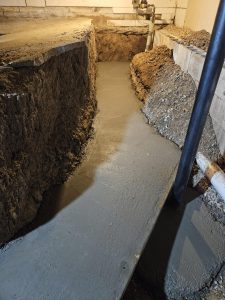
You’re probably wondering, what does basement waterproofing involve? Fundamentally, it’s a process that prevents water from entering your basement.
There are exterior and interior methods, each with its own set of strategies. Exterior waterproofing, often referred to as positive side waterproofing, involves techniques that prevent water from making contact with the basement walls. This could include the use of coatings and membranes, drainage systems, or even landscaping adjustments.
On the other hand, interior waterproofing, or negative side waterproofing, aims to manage the water that has already entered your basement.
These methods, which you’ll explore in more detail in the next section, wouldn’t be complete without a discussion on interior water drainage systems.
Now, let’s turn our attention to interior water drainage systems.
You’ll learn not only what these systems are, but also how they’re installed and maintained.
This essential knowledge will help you guarantee your basement remains dry and damage-free.
Peering down into your basement, you might be oblivious to the hidden battle against water damage. Yet, a properly installed interior drainage system is your best defense, operating as the front line in this unseen war.
Now, you might be asking yourself, “What exactly is an interior drainage system?” Well, it’s a system designed to collect water that seeps into your basement and redirect it away from your home’s foundation. Typically, it’s constructed using a network of drains and pipes placed beneath the basement floor, around the perimeter.
Don’t confuse this with your exterior drainage, though. While they both aim to protect your home, they operate differently. Exterior systems combat water from the outside, while interior ones handle what manages to sneak past them.
So why is interior drainage essential? It’s simple. It helps protect your home’s structural integrity by preventing water buildup, which can lead to damaging effects like mold growth, floor and wall cracks, and even foundation failure.
In a nutshell, understanding interior drainage is significant in maintaining a dry, safe basement. It’s not just about keeping your basement dry, but about ensuring the overall health and longevity of your home.
Having grasped the importance of interior drainage systems, you might be curious about their installation. The procedure isn’t as intimidating as it seems, but it does require precision and understanding.
First, the perimeter of your basement floor is jackhammered to create a trench. This trench is typically about a foot wide and a foot deep, but dimensions may vary depending on your basement’s structure. The excavated concrete is carefully removed, guaranteeing the integrity of your foundation isn’t compromised.
Next, a perforated drain pipe is laid within the trench, sloping towards the sump pump location. This pipe is designed to capture any water that trickles down your basement walls or seeps through the floor. It’s critical to guarantee the pipe slopes downward correctly to direct water efficiently.
Gravel is then poured over the pipe to improve drainage and prevent sediment from clogging the pipe. The trench is finally sealed with fresh concrete, leaving only the sump pump visible.
To guarantee your interior water drainage system operates at peak performance, regular maintenance is essential. It’s not enough to install a high-quality system and then forget about it. Like any other aspect of your home, it needs a bit of TLC to keep doing its job effectively.
Firstly, keep an eye out for any signs of blockage. This could be as obvious as water pooling where it shouldn’t, or more subtle, like a musty smell indicating dampness. Regularly inspect your system for debris or sediment buildup, and clean it out as necessary.
Next, verify your sump pump is in working order. It’s the heart of your system, pumping out any water that collects in your basement. Test it periodically by pouring a bucket of water into the sump pit. It should kick on automatically and drain the water away. If it doesn’t, it’s time for repairs or replacement.
Additionally, check your system’s discharge lines. They should be clear of obstructions and correctly positioned to direct water away from your home’s foundation.
Now let’s turn our focus to exterior waterproofing methods, a vital aspect of basement waterproofing.
You’ll find excavation techniques and the application of external sealants to be particularly effective.
Understanding these methods can greatly enhance your ability to protect your home from water damage.
A multitude of homeowners are turning to excavation waterproofing techniques, a savvy choice for exterior waterproofing. This method involves digging up the area around your home’s foundation to install a waterproof barrier. Though it’s labor-intensive and can be costly, it’s one of the most effective ways to keep your basement dry.
You might wonder why you’d want to go to all this trouble. Well, excavation waterproofing doesn’t just keep water out of your basement. It also protects your foundation from damage caused by water pressure. Over time, constant pressure from groundwater can cause cracks in your foundation, leading to serious structural issues.
But there’s more to excavation waterproofing than just digging. It also involves the installation of a drainage system to divert water away from your home. This not only prevents water from pooling around your foundation but also reduces hydrostatic pressure.
Bear in mind, excavation waterproofing isn’t a DIY project. It requires the expertise of a professional contractor who understands the specifics of your property, local building codes, and weather conditions.
Although the upfront cost is significant, the payoff regarding long-term protection is well worth the investment.
While excavation waterproofing offers extensive protection, applying external sealants presents another effective approach to exterior waterproofing. You’ll find that this method is often less disruptive and frequently more budget-friendly than excavation.
External sealants are fundamentally waterproof barriers applied to your basement’s exterior walls. They’re designed to prevent water from penetrating the wall material and entering your home. This technique is particularly efficient at addressing dampness caused by rainfall or melting snow.
Choosing the right sealant is essential. You’ll need one that’s durable, capable of withstanding severe weather conditions, and resistant to the soil’s acidity. The most common types include elastomeric, bituminous, and cementitious sealants.
Elastomeric sealants, for example, are known for their flexibility and adaptability, allowing them to expand and contract with your home’s natural movements without cracking.
Before applying the sealant, verify your wall’s surface is clean and dry. Any cracks or holes should be repaired first. Once applied, allow the sealant to dry completely for maximum effectiveness.
One can’t underestimate the benefits of installing a sump pump in your basement. This simple device can save you from the financial and emotional impact of water damage.
It’s a proactive measure that provides peace of mind, knowing that your home is protected against potential floods.
When water enters your basement, be it from heavy rains, snow melts, or a high water table, the sump pump activates to remove the excess water. It’s your first line of defense, helping to keep your basement dry and your possessions safe.
But there’s more to it than just flood prevention. By maintaining a dry basement, you’re also preventing the growth of mold and mildew, both of which can cause health issues and degrade the structure of your home.
Furthermore, a sump pump can increase your property value. Many homeowners and buyers view this device as a desirable feature, recognizing the protection it provides.
Lastly, by installing a sump pump, you’re likely to lower your insurance premiums. Many insurance companies offer discounts for homes with sump pumps, seeing them as a reduced risk.
Moving beyond the benefits of sump pumps, let’s explore another effective method of basement waterproofing: the use of sealants and coatings.
These substances, when properly applied, form a watertight barrier that prevents moisture from seeping into your basement.
You’ve got two main choices: sealants or coatings.
Sealants are typically applied to the interior surfaces of your basement walls and floor. They’re designed to block the passage of water through the concrete.
Coatings, on the other hand, are typically applied to the exterior of your basement. They’re designed to resist hydrostatic pressure – that’s the pressure exerted by water in the soil surrounding your basement.
When choosing a sealant or coating, it’s essential to take into account the type of soil around your home, the local climate and the age and condition of your basement’s foundation.
Some products work better in certain conditions than others.
You might be surprised to learn just how essential proper insulation is in waterproofing your basement. It’s not just about keeping your home warm during the winter months, it’s also about keeping moisture out.
When you neglect to properly insulate your basement, you’re inviting a host of problems.
Consider this: without proper insulation, your basement becomes a magnet for condensation. When warm air from your home meets the cold surfaces of your basement, it creates moisture, which can lead to dampness and even mold growth.
And we all know, dampness and mold are the arch-nemeses of a healthy basement.
Insulation acts as a barrier, preventing this condensation from occurring. It keeps the temperature of your basement walls closer to the indoor temperature, reducing the chances of condensation forming.
But, there’s more. Proper insulation can also help in reducing energy costs. By insulating your basement, you’re not only waterproofing it, but also making your home more energy-efficient.
You’re preventing heat loss in winter and keeping your home cool in summer.
Insulation is a vital step in your basement waterproofing project. It’s a two-pronged approach – keeping your basement dry and your energy bills down.
Nearly every homeowner with a basement will eventually encounter the dreaded basement wall crack, a common issue that requires the crack injection repair technique. This process is a simple, yet effective tool in your waterproofing arsenal.
Imagine yourself standing in front of a cracked wall. The first step you’d take is to clean the area around the crack, ensuring no loose debris interferes with the process.
Then, you’d apply a surface seal to the crack. This seal serves as a barrier, preventing the injected material from leaking out. It’s like putting a bandage on a wound to help it heal.
Next, you’d insert injection ports into the sealed crack. These ports allow you to directly inject the repair material into the crack. The material used is typically an epoxy or polyurethane resin, which fills and seals the crack from the inside out, ensuring no water can penetrate it.
Patience is key here. You have to wait for the material to cure and harden, which could take anywhere from several hours to a few days.
Once it’s cured, you’ll have a waterproofed, fortified basement wall, free of cracks. That’s the power of the crack injection repair technique.
If your basement continues to fall prey to water intrusion, French drains could provide an effective solution. This technique, named after Henry French who popularized it in the 19th century, is a time-tested method for diverting water away from your home.
It’s particularly effective if your property’s positioned on a slope or your region’s prone to heavy rainfall.
Here’s how it works: A trench is dug around the perimeter of your basement, sloping away from your home. A perforated pipe, wrapped in fabric to prevent soil intrusion, is placed in the trench. The trench is then filled with gravel or rock.
Water seeping into your basement is captured by the French drain, flowing into the perforated pipe, and then diverted away from your home.
Installation of a French drain is typically an outdoor project. However, an interior French drain can be installed if outdoor excavation isn’t feasible.
It’s critical to note that while French drains effectively manage water intrusion, they don’t resolve the source of the water. Additional waterproofing methods may be necessary to fully protect your basement.
Now let’s turn your attention to the use of vapor barriers in basement waterproofing.
You’ll find that they’ve distinct advantages, such as reducing the moisture that penetrates building materials, but they’re not without their drawbacks.
Let’s explore these benefits and potential pitfalls to help you make an informed decision for your basement.
Your home’s basement can greatly benefit from the use of vapor barriers. This material is designed to restrict the flow of water vapor through walls, ceilings, and floors. This is vital because moisture can seep into your basement through the smallest cracks, leading to issues like mold, mildew, and structural damage.
Now, let’s get to the nitty-gritty. Vapor barriers are typically made from plastic or foil sheets, which are applied to the interior side of your basement walls. These barriers are impermeable to water vapor, meaning they don’t allow moisture to pass through.
However, it’s important to keep in mind that vapor barriers aren’t a one-size-fits-all solution. You’ll need to take into account factors such as your local climate and the type of soil around your home.
Additionally, installation can be tricky. If not done correctly, it could lead to more harm than good, trapping moisture where it shouldn’t be.
Also, vapor barriers may not be enough on their own. Depending on your situation, you might need to pair them with other waterproofing techniques.
Despite the challenges in installation and selectivity in effectiveness, vapor barriers come with a host of benefits.
To begin with, they’re effective in controlling moisture. You’ll find this particularly beneficial in climates with high humidity. The barrier prevents water vapor from seeping into the basement, thereby limiting potential water damage and mold growth.
In addition, vapor barriers can notably improve your home’s energy efficiency. By blocking the passage of warm air to colder areas, they help maintain your basement’s temperature, reducing the amount of energy you’ll need for heating or cooling. This means you’ll save on energy bills in the long run.
Furthermore, vapor barriers can also extend the lifespan of your home’s structure. By preventing moisture intrusion, they help protect the structural integrity of your basement. This means fewer repairs and more savings for you.
While vapor barriers offer numerous benefits, they also come with their own set of drawbacks. One major disadvantage is the potential for condensation. If installed incorrectly, moisture can get trapped between the wall and the barrier, leading to mold and mildew. You’ll have to guarantee perfect sealing to avoid this, which can be a meticulous and time-consuming task.
Moreover, vapor barriers can be quite costly. The material itself may not be expensive, but professional installation can greatly increase your expenses. If you’re on a budget, you might want to take into account other waterproofing options.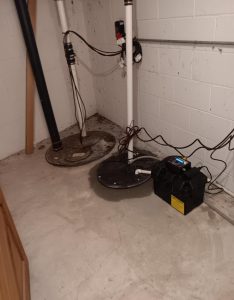
Additionally, vapor barriers aren’t entirely foolproof. They can get punctured or torn during installation or later due to shifting and settling in the home. Even a small tear compromises the barrier’s effectiveness, meaning you’d have to invest in repairs or replacement.
Lastly, not all climates are suitable for vapor barriers. In colder regions, for example, these barriers can actually trap moisture inside the home, exacerbating damp issues.
Consequently, you must research your local climate before deciding on this method. Remember, while vapor barriers can be beneficial, they require careful thought and planning.
Selecting the most suitable waterproofing method for your basement isn’t a decision to be taken lightly. It’s a choice that requires careful consideration of your property’s specific needs and circumstances.
You’ll need to assess the level of moisture intrusion, the basement’s construction type, and the intended use of your basement.
Several techniques exist, and each has its advantages and disadvantages. Interior water drainage, for example, can be effective but may not be enough if your basement suffers from high groundwater levels.
External waterproofing offers extensive protection but can be costly and disruptive to install. Vapor barriers are simple to implement but are rarely a stand-alone solution for serious moisture problems.
You should also consider the long-term benefits versus the upfront costs. While a cheaper method might seem attractive initially, it may not provide the lasting, effective protection your basement needs.
It’s often better to invest in a more robust solution that will stand the test of time.
Just like an umbrella shields you from the rain, these basement waterproofing techniques protect your home from water damage. From interior water drainage systems to vapor barriers, each method offers its own unique benefits. Whether it’s sealing cracks or installing a sump pump, these techniques guarantee a dry and safe home. Choosing the right technique is essential, just like picking the perfect umbrella on a stormy day. Stay informed, stay dry, and safeguard your home.

Tom Trinko is the dedicated owner of Basement Repair Specialists, a company renowned for its expert solutions in basement and foundation repairs. With a strong commitment to excellence and customer satisfaction, Tom has led his team to become one of the leading providers in the industry. Under his guidance, Basement Repair Specialists have developed a reputation for their reliability, innovative repair techniques, and exceptional service. Tom’s leadership is defined by his vast industry knowledge, customer-first approach, and a steadfast dedication to providing homeowners with cost-effective, durable solutions for their basement and foundation needs. For more information about Tom Trinko and the services offered by Basement Repair Specialists, visit their website at https://basementrepairspecialists.com/.
Contact the Professionals at Basement Repair Specialists, LLC Today! (855) 554-7246