
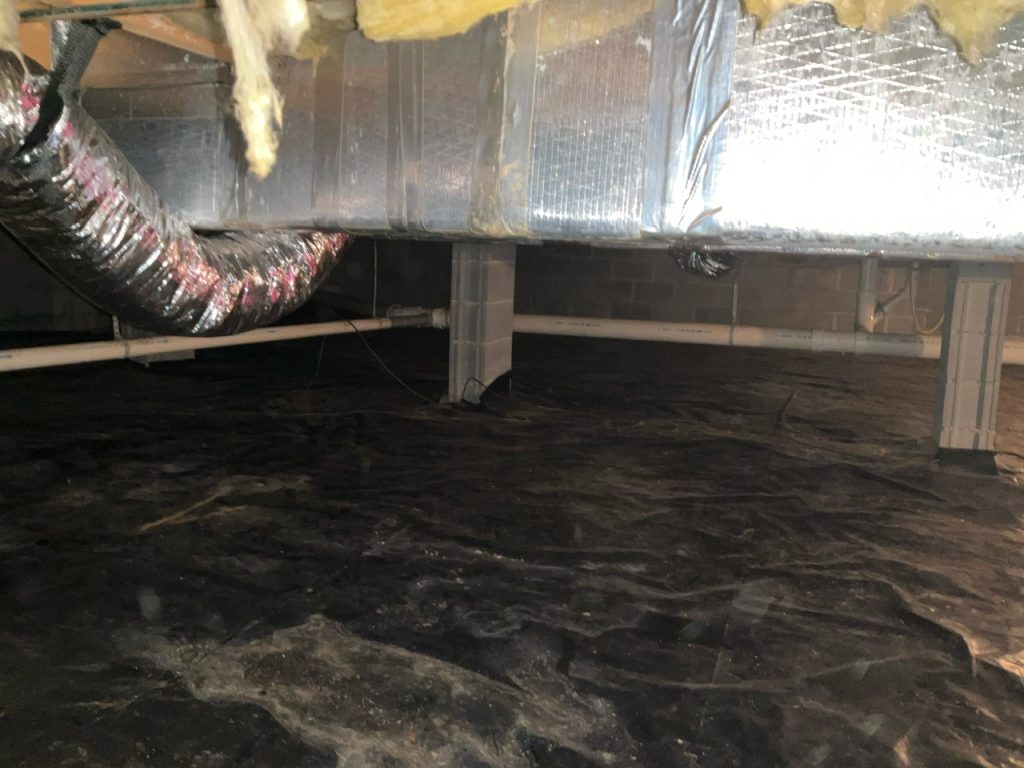
You might not realize it, but the moisture in your home’s crawlspace could be compromising the air quality throughout your entire house. This unseen issue can lead to a host of problems, from mold and mildew growth to an increase in allergens. Even if you can’t see or smell it, this dampness could be subtly affecting your health and comfort. So, what’s the connection between your crawlspace’s moisture and the rest of your home, and how can you address it? Stick around, because we’re about to unpack this crucial issue.
 You may not think much about your crawlspace, but it’s crucial to understand how moisture in this area can affect your home’s structure and air quality.
This often-neglected area is prone to excess dampness due to its close proximity to the ground. When it rains, water can seep in, leading to a buildup of moisture. Similarly, condensation from humidity can accumulate, saturating the soil and structural elements.
This accumulation of moisture isn’t just a nuisance; it’s a genuine threat to your home. It can cause the wood in your home’s structure to rot, compromising its integrity.
Over time, this could lead to significant damage requiring costly repairs. It can also encourage the growth of mold and mildew, which aren’t only unsightly but can also lead to health issues.
Regularly inspecting your crawlspace and taking steps to control moisture can help prevent these problems. This might involve improving drainage around your home, using a dehumidifier, or investing in a crawlspace vapor barrier.
Despite its hidden nature, the state of your crawlspace has a direct impact on the air quality inside your home. You might not think about it often, but the air in this small, tucked-away area doesn’t stay there. It circulates throughout your entire home, carrying with it any contaminants that might be present.
When your crawlspace is damp or wet, it becomes a breeding ground for mold and mildew. These fungi release spores into the air, which then get circulated throughout your house. The same goes for any pests that might be attracted to the moisture. Their droppings and remains can also become airborne, negatively affecting your indoor air quality.
Here’s a brief table showing the common crawlspace issues and how they affect your home’s air:
| Issues | Causes | Impact on Indoor Air |
|---|---|---|
| Moisture | Poor drainage | Mold growth |
| Pests | Dampness | Allergens |
| Mold and Mildew | High humidity | Bad odors, Allergens |
You mightn’t realize it, but poor crawlspace ventilation can seriously impact your home.
It can create an environment ripe for dampness and mold growth, which can degrade your home’s air quality.
Furthermore, it may heighten the risk of structural damage to your property.
Poor crawlspace ventilation’s impact on your home’s health can’t be overstated. Without adequate ventilation, dampness sets in, creating the perfect environment for mold growth. This isn’t just an aesthetic issue; it’s a serious health risk.
You see, mold releases microscopic spores into the air. When you breathe them in, they can cause allergic reactions, respiratory problems, and even neurological effects.
Now, you might think your crawlspace is separate from your living areas, but it’s not. The air in your crawlspace can end up in your home through a process called “stack effect.” This means that the mold-infested air doesn’t stay confined; it circulates throughout your house.
To maintain good air quality, it’s essential to keep your crawlspace dry. Use a dehumidifier, install a vapor barrier, or consider encapsulation.
Don’t let poor ventilation turn your crawlspace into a mold factory. It’s not just about protecting your home’s structure; it’s about safeguarding your family’s health.
Act now, before dampness and mold take over, and you’ll breathe easier in your own home.
Over time, poor crawlspace ventilation can lead to serious structural damage in your home. This is because excessive moisture from a poorly ventilated crawlspace can seep into the wooden structural components, causing them to rot and weaken.
When that happens, you’re looking at a significant risk of foundational issues that could compromise your home’s stability.
Imagine what happens to a piece of wood left out in the rain, it gets soggy and starts to break down, right? That’s exactly what’s happening to your home’s structural components when they’re exposed to continuous moisture from a poorly ventilated crawlspace.
They become weak and start to sag, and if left unchecked, your floors could start to buckle, your walls could start to crack, and your home could start to shift.
But it’s not just your home’s structure that’s at risk. Poor crawlspace ventilation can also lead to pest infestations.
Pests love damp, dark spaces, and a poorly ventilated crawlspace provides the perfect home for them. From termites that can further damage your home’s structure to rodents that can spread disease, the risks are high.
You mightn’t realize it, but high humidity levels in your crawlspace can have a direct impact on your health.
This moisture can lead to respiratory issues, promote mold growth that triggers allergies, and even aggravate existing asthma conditions.
It’s essential to understand these risks in order to maintain a healthy living environment.
Excessive humidity in your crawlspace isn’t just a structural concern – it’s a significant health hazard as well.
High levels of humidity in your home can lead to a host of respiratory issues. Here’s how:
High humidity levels in your crawlspace don’t just create an uncomfortable living environment, they can also lead to harmful mold growth. Mold thrives in moist, dark areas and your damp crawlspace is the perfect breeding ground. Once established, mold spores can easily spread throughout your entire home, negatively affecting the air quality.
These spores can trigger allergic reactions and cause numerous health problems. If you’re allergic to mold, exposure can cause symptoms such as sneezing, runny nose, red eyes, and skin rash. In severe cases, it can lead to a condition called allergic bronchopulmonary aspergillosis.
The following table illustrates common mold types and their associated health risks:
| Mold Type | Health Risks |
|---|---|
| Aspergillus | Allergic reactions, lung infections |
| Cladosporium | Allergic reactions, sinusitis |
| Penicillium | Allergic reactions, asthma attacks |
| Stachybotrys (Black Mold) | Flu-like symptoms, memory loss, severe respiratory damage |
Maintaining the right humidity level in your crawlspace is essential to prevent mold growth and protect your health. Look out for the signs of mold and take immediate action to eliminate it and prevent future growth.
Often, the effects of high humidity levels in crawlspaces reach beyond mold growth and allergic reactions. They can also aggravate asthma conditions, affecting the health of everyone in your home.
When your crawlspace has high humidity levels, it becomes a breeding ground for dust mites and mold spores, both of which are common asthma triggers. But how does this happen?
It’s essential to control crawlspace humidity not only to prevent structural damage but also to protect your family’s health.
You wouldn’t want your home to be a source of discomfort or health risks, would you?
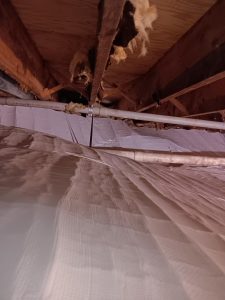 When the time comes to address moisture problems in your crawlspace, finding professional moisture control solutions should be top priority. It’s not a task you should take lightly; the health and safety of your home’s air quality depends on it.
Don’t be tempted to treat this as a DIY project. Moisture control is a specialized job that requires professional expertise. You need someone who understands the intricate dynamics of moisture and its interaction with your home.
Professionals have the right tools, knowledge, and experience to diagnose and fix the problem effectively.
Start by researching local companies specializing in moisture control. Check their reviews and ratings. Don’t hesitate to ask for references or proof of past successful projects. It’s also important to guarantee they’re licensed and insured.
Once you’ve narrowed down your choices, get quotes for the job. While it’s tempting to go with the cheapest option, remember that quality service is paramount. You’re investing in your home’s health, so it’s worth paying for a job well done.
Lastly, ask about their after-service care. A good company will offer follow-up visits to guarantee the solution is working.
In the end, you’ll have peace of mind knowing your home’s air quality is safeguarded by professionals.
You’ve tackled the moisture problem in your crawlspace with professional help, a smart move that secures your home’s air quality.
Yet, the real challenge lies in preventing future moisture issues. Don’t worry, we’ve your back with some preventive measures.
Firstly, consider regular maintenance. Have your crawlspace inspected at least once a year to identify any potential problems early.
So, keeping your crawlspace dry is essential for your home’s overall air quality. It prevents the growth of mold and mildew, reduces allergens, and keeps pests at bay. Don’t underestimate the health risks of high humidity levels. Consult a professional for moisture control solutions and implement preventive measures to avoid future issues. Remember, a dry crawlspace means cleaner air and a healthier home for you and your loved ones.

Tom Trinko is the dedicated owner of Basement Repair Specialists, a company renowned for its expert solutions in basement and foundation repairs. With a strong commitment to excellence and customer satisfaction, Tom has led his team to become one of the leading providers in the industry. Under his guidance, Basement Repair Specialists have developed a reputation for their reliability, innovative repair techniques, and exceptional service. Tom’s leadership is defined by his vast industry knowledge, customer-first approach, and a steadfast dedication to providing homeowners with cost-effective, durable solutions for their basement and foundation needs. For more information about Tom Trinko and the services offered by Basement Repair Specialists, visit their website at https://basementrepairspecialists.com/.
Contact the Professionals at Basement Repair Specialists, LLC Today! (855) 554-7246