Basement Wall Crack Repair: Methods and Importance

Basement wall cracks are a common issue that many homeowners face. These cracks can range from minor cosmetic issues to significant structural problems, potentially compromising the integrity of the entire building. Addressing basement wall cracks promptly is crucial to prevent further damage, water infiltration, and potential health hazards such as mold growth. This article explores the causes ofbasement wall cracks, various repair methods, and the importance of timely intervention, providing a comprehensive guide for homeowners.
Understanding Basement Wall Cracks
Basement wall cracks can appear for several reasons, and identifying the type and cause of the crack is essential for determining the appropriate repair method. The common types of basement wall cracks include:
- Hairline Cracks: These small, fine cracks are often superficial and result from shrinkage as concrete cures. While usually not a structural concern, they can still allow water seepage.
- Vertical Cracks: Typically caused by foundation settling, vertical cracks are common in new homes and generally less serious than horizontal cracks. However, they can still permit water infiltration.
- Diagonal Cracks: Often resulting from differential settling of the foundation, diagonal cracks can vary in severity and may indicate underlying issues with soil conditions or foundation stability.
- Horizontal Cracks: These are the most serious type of cracks, often indicating significant structural problems caused by lateral pressure from soil or water. Immediate attention is required to prevent further damage.
- Step Cracks: Found in concrete block walls, step cracks follow the mortar joints in a stair-step pattern and are usually a sign of settling or shifting foundation.
Causes of Basement Wall Cracks
Understanding the causes of basement wall cracks is crucial for implementing effective repair solutions. The primary causes include:
- Foundation Settling: As a building settles over time, the foundation can shift, leading to cracks in the basement walls.
- Soil Pressure: Expansive soils, such as clay, can exert lateral pressure on basement walls, causing them to crack.
- Water Damage: Poor drainage, high water tables, or plumbing leaks can lead to water infiltration and subsequent cracking.
- Temperature Changes: Fluctuations in temperature can cause concrete to expand and contract, resulting in cracks.
- Construction Issues: Poor construction practices, such as inadequate reinforcement or improper curing of concrete, can lead to cracking.
- Natural Disasters: Earthquakes, floods, and other natural events can cause significant damage to basement walls.
Methods of Basement Wall Crack Repair
Various methods are available for repairing basement wall cracks, each suited to specific types of cracks and underlying issues. The most common repair methods include:
1. Epoxy Injection
Epoxy injection is a widely used method for repairing narrow, non-moving cracks in concrete walls. It is ideal for structural repairs and can restore the original strength of the wall.
- Process: The crack is cleaned and any loose debris removed. Injection ports are placed along the crack, and epoxy resin is injected under pressure to fill the crack entirely.
- Advantages: Provides a strong, permanent repair that restores the structural integrity of the wall. Suitable for hairline and small cracks.
- Disadvantages: Not effective for cracks that are still moving or in areas with ongoing water infiltration.
2. Polyurethane Foam Injection
Polyurethane foam injection is used to repair cracks that are leaking water. The flexible nature of polyurethane allows it to accommodate slight movements in the wall.
- Process: Similar to epoxy injection, the crack is cleaned, and injection ports are installed. Polyurethane foam is injected, which expands to fill the crack and forms a waterproof seal.
- Advantages: Effective for sealing leaks and accommodating minor wall movements. Can be used in wet conditions.
- Disadvantages: Not as strong as epoxy and not suitable for structural repairs.
3. Carbon Fiber Reinforcement
Carbon fiber strips can be used to strengthen and stabilize cracked basement walls, particularly those with horizontal or diagonal cracks indicating structural issues.
- Process: The wall surface is cleaned, and carbon fiber strips are bonded to the wall using high-strength epoxy. These strips provide additional tensile strength to the wall.
- Advantages: Non-invasive and quick to install. High strength-to-weight ratio. Effective for stabilizing walls.
- Disadvantages: Not suitable for all types of cracks. Requires a relatively smooth wall surface for proper adhesion.
4. Crack Stitching
Crack stitching involves using steel rods or staples to reinforce and stabilize cracked walls. This method is effective for repairing larger cracks and preventing further movement.
- Process: Holes are drilled on either side of the crack, and steel rods or staples are inserted across the crack. The rods are then grouted into place, providing a strong mechanical bond.
- Advantages: Provides strong reinforcement and stability. Suitable for larger cracks and structural repairs.
- Disadvantages: More invasive than other methods. Requires precise installation.
5. Hydraulic Cement
Hydraulic cement is used to fill and seal cracks in concrete walls, particularly those that are leaking water. It expands as it cures, providing a watertight seal.
- Process: The crack is cleaned and moistened, and hydraulic cement is applied using a trowel. The cement expands to fill the crack and hardens quickly.
- Advantages: Quick and easy to apply. Effective for sealing leaks.
- Disadvantages: Not suitable for structural repairs. Limited flexibility may not accommodate wall movements.
6. Wall Anchors
Wall anchors are used to stabilize and straighten bowed or leaning basement walls caused by soil pressure or water damage.
- Process: Anchors are installed by driving steel rods through the wall and into the soil outside the foundation. The rods are then connected to wall plates inside the basement, and the system is tightened to straighten and stabilize the wall.
- Advantages: Effective for stabilizing bowed walls. Minimal disturbance to the home’s interior. Can be adjusted over time.
- Disadvantages: Requires excavation outside the foundation. Can be challenging to install in confined spaces.
Choosing the Right Repair Method
Selecting the appropriate repair method depends on several factors, including the type and severity of the crack, the underlying cause, and the specific needs of the homeowner. Consulting with a professional foundation repair specialist is essential to diagnose the problem accurately and recommend the best course of action.
Importance of Timely Repair
Investing in timely basement wall crack repair offers numerous benefits for homeowners, including:
- Preventing Further Damage: Addressing cracks early prevents them from worsening and causing more extensive damage to the structure.
- Maintaining Property Value: A well-maintained foundation is crucial for maintaining and enhancing the value of the property.
- Ensuring Safety: Cracks can compromise the structural integrity of the home, posing risks to its occupants.
- Improving Indoor Air Quality: Repairing cracks can prevent moisture infiltration, reducing the risk of mold growth and improving indoor air quality.
- Enhancing Energy Efficiency: A stable foundation helps maintain proper insulation and reduces energy costs.
DIY vs. Professional Crack Repair
Homeowners may consider tackling minor crack repairs as DIY projects, while more extensive issues should be handled by professionals. Each approach has its pros and cons.
DIY Crack Repair
DIY crack repair can be a cost-effective option for minor issues and involves tasks such as:
- Sealing small cracks with epoxy or polyurethane injections.
- Applying hydraulic cement to seal leaks.
- Installing gutter extensions to improve drainage.
Advantages:
- Cost-effective for minor repairs.
- Can be completed with basic tools and materials.
Disadvantages:
- Limited to minor issues.
- Risk of improper repair, leading to further damage.
Professional Crack Repair
Hiring professional foundation repair contractors is recommended for significant cracks or structural issues. Professionals offer:
- Expertise in diagnosing and repairing complex foundation issues.
- Access to specialized equipment and high-quality materials.
- Comprehensive solutions that address underlying causes.
- Guaranteed work, providing peace of mind and long-term stability.
Advantages:
- Ensures accurate diagnosis and effective repair.
- Suitable for all types of foundation problems.
- Professional guarantees and warranties.
Disadvantages:
- Higher upfront cost compared to DIY methods.
Case Studies of Basement Wall Crack Repair
Examining real-life examples of basement wall crack repair can provide valuable insights into the effectiveness of various methods and the benefits they offer. Here are a few case studies:
Case Study 1: Epoxy Injection for Structural Cracks
A homeowner noticed significant vertical cracks in the basement walls, indicating foundation settlement. A foundation repair specialist recommended epoxy injection as the best solution.
- Solution: The cracks were cleaned, and injection ports were installed. Epoxy resin was injected under pressure, filling the cracks entirely and restoring the structural integrity of the walls.
- Results: The cracks were successfully repaired, and the walls regained their original strength. The homeowner was satisfied with the long-term stability and peace of mind.
Case Study 2: Polyurethane Foam Injection for Leaking Cracks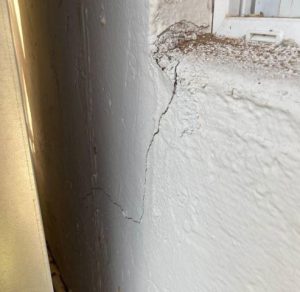
A homeowner experienced water leakage through hairline cracks in the basement walls during heavy rains. A foundation repair contractor recommended polyurethane foam injection to seal the leaks.
- Solution: The cracks were cleaned, and injection ports were installed. Polyurethane foam was injected, expanding to fill the cracks and form a waterproof seal.
- Results: The leaks were effectively sealed, and the basement remained dry even during heavy rains. The homeowner appreciated the quick and non-invasive repair method.
Case Study 3: Carbon Fiber Reinforcement for Bowed Walls
A homeowner observed that the basement walls were bowing inward due to soil pressure. A foundation repair specialist recommended carbon fiber reinforcement to stabilize the walls.
- Solution: The wall surface was cleaned, and carbon fiber strips were bonded to the wall using high-strength epoxy. The strips provided additional tensile strength to the walls.
- Results: The walls were stabilized, and further bowing was prevented. The homeowner was pleased with the minimal disruption to the home’s interior and the long-term effectiveness of the solution.
Basement wall crack repair is a critical aspect of maintaining the structural integrity and safety of your home. Understanding the common types of cracks, their causes, and the appropriate repair methods is essential for homeowners. Whether dealing with minor issues that can be addressed with DIY methods or more extensive problems requiring professional intervention, timely basement wall crack repair is crucial to prevent further damage and ensure the longevity of your home.
Investing in crack repair not only protects your property value but also enhances the safety, energy efficiency, and indoor air quality of your home. By addressing foundation problems proactively and choosing the right repair methods, homeowners can achieve lasting stability and peace of mind.
Contact the Professionals at Basement Repair SpecialistsToday!(855) 554-7246
Tom Trinko is the dedicated owner of Basement Repair Specialists, a company renowned for its expert solutions in basement and foundation repairs. With a strong commitment to excellence and customer satisfaction, Tom has led his team to become one of the leading providers in the industry. Under his guidance, Basement Repair Specialists have developed a reputation for their reliability, innovative repair techniques, and exceptional service. Tom’s leadership is defined by his vast industry knowledge, customer-first approach, and a steadfast dedication to providing homeowners with cost-effective, durable solutions for their basement and foundation needs. For more information about Tom Trinko and the services offered by Basement Repair Specialists, visit their website at https://basementrepairspecialists.com/.
Contact the Professionals at Basement Repair Specialists, LLC Today! (855) 554-7246