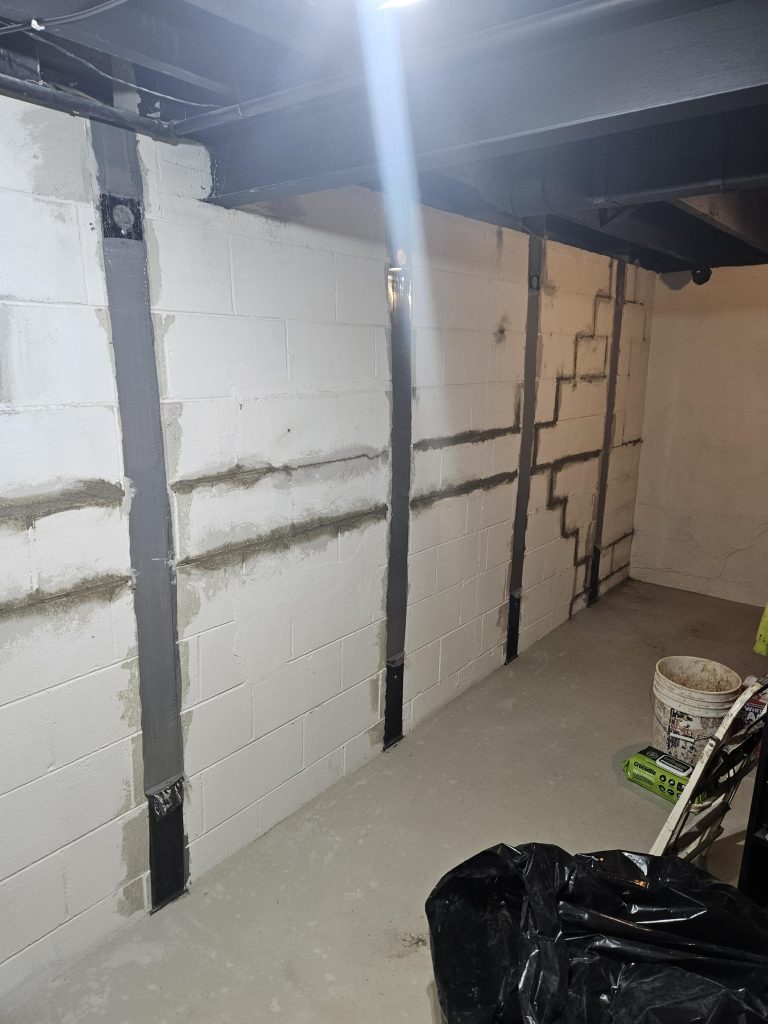
Noticing an inward curve, a long horizontal crack, or stair-step mortar breaks along your basement wall is one of the most stressful discoveries a Wisconsin homeowner can make. It is not just a cosmetic issue—it is a clear warning sign that exterior soil pressure is actively overpowering your foundation.
Wisconsin’s native clay soil acts much like a massive sponge. During wet spring seasons and humid summers, clay absorbs high volumes of water and expands significantly. When winter arrives, freeze-thaw cycles exert thousands of pounds of lateral hydrostatic pressure against concrete block and poured foundation walls. Over time, this relentless push forces walls inward, threatening the structural integrity of the entire home. The good news? You can permanently stabilize your foundation before catastrophic failure occurs. The two most effective, code-compliant solutions are carbon fiber reinforcement and steel wall anchors. Here is how they stack up so you can choose the right fix for your home.
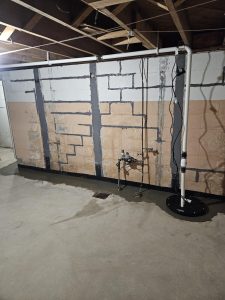
Before selecting a repair method, an accurate structural assessment is essential. The right solution depends heavily on the degree of wall deflection (how far the wall has bowed inward from its original vertical plumb position):
Keep an eye out for key structural warning signs: a wide horizontal crack running along the third or fourth block course, stair-step mortar cracks near corners, or visible separation where the top of the foundation meets upper floor joists.
Carbon fiber repair systems utilize space-age composite materials originally engineered for aerospace applications. Flexible carbon fiber straps are bonded directly to the interior face of the basement wall using high-strength structural epoxy.
Best For: Basements with less than 2 inches of inward deflection where exterior yard excavation is unnecessary or impractical.
For walls that have shifted significantly or sheared at the base, wall anchors or vertical steel I-beams provide heavy-duty structural support.
 Wall Anchors
Wall anchors consist of an interior steel wall plate connected by a solid steel rod to an anchor plate driven deep into stable virgin soil 12 to 15 feet outside your home. Technicians tighten the connecting rod, utilizing soil resistance to hold the wall securely in place and even pull it back toward plumb over time.
If outdoor space is restricted (due to proximity to neighboring homes, decks, or paved driveways), heavy-gauge steel I-beams are custom-fit floor-to-ceiling inside the basement. Anchored to the concrete floor slab and heavy floor joists above, they prevent inward movement regardless of exterior soil conditions.
Fixing a severely bowed wall is not just about pushing concrete back into place—it is about addressing the root cause: hydrostatic water pressure. Low-cost contractors often try to jack a wall upright while leaving heavy, water-soaked clay soil tightly packed against the exterior. When the next freeze comes, that clay expands again, risking repeated foundation movement.
A true permanent repair involves exterior excavation down to the foundation footings, relief of the soil pressure, installation of new drainage systems, and backfilling with clean washed stone to allow water to drain freely to your sump pit.
The best repair depends on how far the foundation wall has moved, the type of wall, and the cause of the pressure. Carbon fiber reinforcement is often appropriate for walls with minor to moderate inward movement, while wall anchors, steel reinforcement, or wall straightening may be needed for more severe bowing. A professional foundation inspection should measure the wall’s deflection before a repair system is selected.
Neither system is automatically better. Carbon fiber is generally best for stabilizing walls that have not moved significantly and do not require straightening. Wall anchors or other steel reinforcement systems are typically considered when movement is more advanced or additional structural correction is needed. Site conditions also matter because traditional wall anchors require adequate exterior space.
Carbon fiber is primarily a wall stabilization system, not a wall-straightening system. It is designed to reinforce the foundation wall and help prevent additional inward movement. If a wall has already bowed significantly and needs to be moved back toward its original position, a different repair method may be required.
Bowing basement walls in Wisconsin are commonly associated with lateral pressure from soil surrounding the foundation. Clay-rich soil can retain water and expand, while Wisconsin’s repeated freeze-thaw cycles can place additional stress on foundation walls. Poor exterior drainage, saturated soil, and hydrostatic pressure can make these conditions worse.
Common warning signs include horizontal cracks across basement walls, stair-step cracks along mortar joints, inward curvature, displacement between concrete blocks, and separation near the top or bottom of the wall. Horizontal cracking combined with visible inward movement should be evaluated promptly because it can indicate significant lateral soil pressure.
Carbon fiber is generally used for walls with limited deflection that are still structurally suitable for reinforcement. Walls approaching or exceeding approximately 2 inches of inward movement may require a more extensive repair, but the correct threshold depends on the wall construction, cracking pattern, shearing, and overall structural condition. The wall should be professionally measured rather than choosing a repair based on appearance alone.
Not every crack represents an immediate structural emergency, but a wall that is visibly bowing or continuing to move should not be ignored. Foundation movement can become more difficult and expensive to correct as displacement increases. An inspection can determine whether the wall is stable, actively moving, or requires structural reinforcement.
Yes. Poor grading, clogged or inadequate drainage, saturated backfill, and ineffective footing drainage can increase soil and hydrostatic pressure against a basement wall. For this reason, a long-term foundation repair plan may include both structural stabilization and improvements to exterior or interior water management.
Installation time depends on the repair method and severity of the damage. Carbon fiber reinforcement can often be installed relatively quickly because the work is performed from inside the basement. Wall straightening, excavation, drainage improvements, wall anchors, or other structural repairs may require additional time depending on the property.
Basement Repair Specialists, LLC provides bowing basement wall and foundation repair evaluations for homeowners throughout Wisconsin, including Appleton, Green Bay, Madison, Milwaukee, and surrounding communities. The appropriate repair is determined by inspecting the wall, measuring its movement, evaluating cracking and structural conditions, and identifying the soil or water pressure contributing to the problem.
A bowing basement wall rarely improves on its own. The key is determining how far the wall has moved, what is causing the pressure, and whether the foundation needs stabilization, straightening, or both.
For Wisconsin homes with minor to moderate wall movement, carbon fiber reinforcement can provide a strong, low-profile solution without exterior excavation. When bowing is more severe, the wall has shifted at the base, or structural correction is necessary, steel reinforcement, wall anchors, or a more comprehensive wall-straightening system may be appropriate.
Just as importantly, the repair should address the conditions contributing to the movement. Wisconsin’s clay soils, seasonal moisture, poor drainage, and repeated freeze-thaw cycles can continue placing pressure on a foundation if the underlying water and soil conditions are ignored.
Basement Repair Specialists, LLC evaluates bowing and cracked basement walls throughout Appleton, Green Bay, Madison, Milwaukee, and surrounding Wisconsin communities. Our team can measure the wall’s movement, identify the likely source of the pressure, and recommend a repair strategy based on the actual condition of your foundation—not a one-size-fits-all solution.
If you’ve noticed a horizontal foundation crack, stair-step cracking, or a basement wall beginning to lean inward, schedule an evaluation before additional movement makes the repair more extensive.
Call Basement Repair Specialists at (855) 755-4811 or complete our online form to request a bowing basement wall evaluation in Wisconsin.

Tom Trinko is the dedicated owner of Basement Repair Specialists, a company renowned for its expert solutions in basement and foundation repairs. With a strong commitment to excellence and customer satisfaction, Tom has led his team to become one of the leading providers in the industry. Under his guidance, Basement Repair Specialists have developed a reputation for their reliability, innovative repair techniques, and exceptional service. Tom’s leadership is defined by his vast industry knowledge, customer-first approach, and a steadfast dedication to providing homeowners with cost-effective, durable solutions for their basement and foundation needs. For more information about Tom Trinko and the services offered by Basement Repair Specialists, visit their website at https://basementrepairspecialists.com/.
Contact the Professionals at Basement Repair Specialists, LLC Today! (855) 554-7246