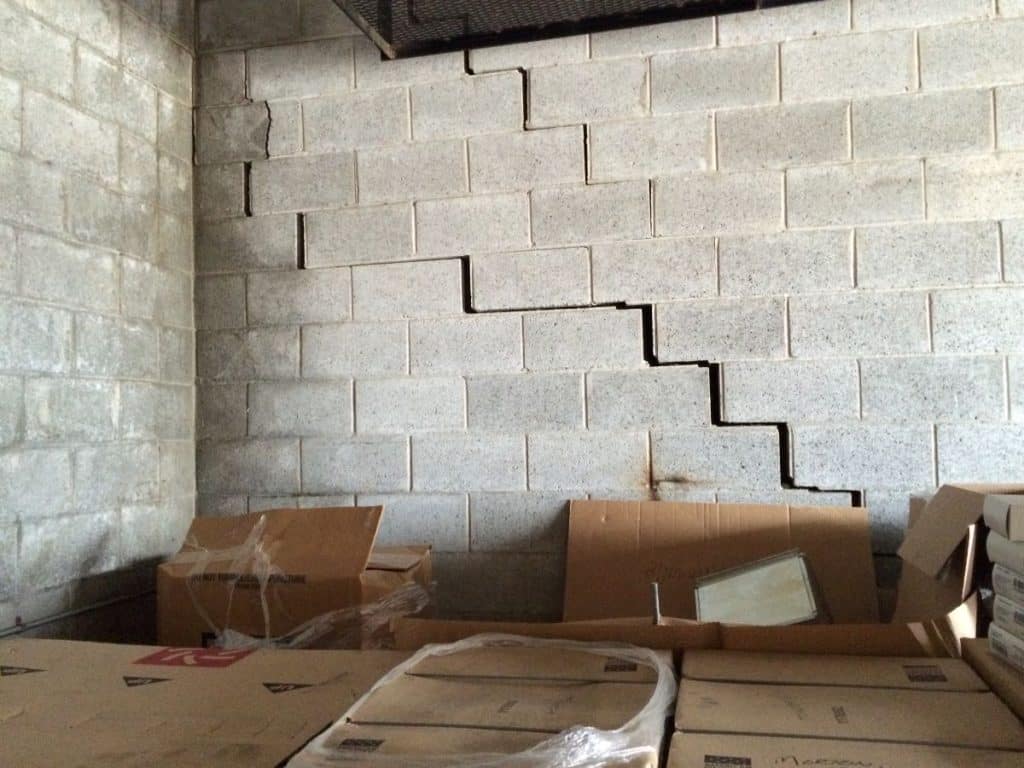
The foundation is the most critical structural component of any home, supporting its entire weight and maintaining stability. Over time, various factors such as soil conditions, water damage, or natural wear and tear can compromise the foundation’s integrity. Prompt and effective foundation repair is essential to avoid further structural issues and maintain the safety and value of your home. This article explores common foundation problems, repair methods, and preventive strategies for long-term stability.
The Importance of Foundation Repair
Ignoring foundation issues can lead to severe consequences, such as:
- Structural Damage:Cracks, settling, or bowing can cause damage to walls, ceilings, and floors.
- Water Infiltration:Cracks in the foundation can allow water to seep into basements or crawlspaces, leading to moisture problems and mold growth.
- Safety Hazards:Severe foundation issues can compromise the stability of the home, posing risks to its occupants.
- Decreased Property Value:Homes with visible foundation problems are less appealing to buyers and can lose significant market value.
Timelyfoundation repairensures the long-term safety and functionality of your home while preserving its value.
Common Causes of Foundation Problems
Understanding what causes foundation issues can help homeowners prevent them. Common causes include:
 Soil Movement
- Expansive clay soils expand and contract with moisture changes, putting pressure on the foundation.
- Loose or improperly compacted soil can cause settling and uneven support.
- Water Damage
- Poor drainage, leaks, or heavy rainfall can erode the soil around the foundation, leading to instability.
- Hydrostatic pressure from groundwater can push against basement walls, causing cracks and bowing.
- Tree Roots
- Roots growing too close to the home can disrupt soil and exert pressure on the foundation.
- Natural Events
- Earthquakes, floods, and droughts can create sudden or gradual shifts in the foundation.
- Construction Deficiencies
- Poor construction techniques or subpar materials can result in a weak foundation that is prone to damage.
Signs of Foundation Problems
Early detection of foundation issues is crucial for minimizing repair costs and preventing further damage. Look for these warning signs:
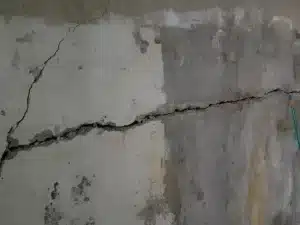
- Cracks:Vertical, horizontal, or stair-step cracks in walls, floors, or the foundation itself.
- Uneven Floors:Sloping or sagging floors inside the home.
- Sticking Doors and Windows:Difficulty opening or closing doors and windows, often due to frame misalignment.
- Gaps:Spaces between walls, ceilings, or floors, indicating movement in the foundation.
- Bowing Walls:Basement walls that bulge inward due to external soil pressure.
- Water Intrusion:Persistent moisture or pooling water in the basement or crawlspace.
Effective Foundation Repair Methods
The choice of foundation repair technique depends on the severity of the issue, the type of foundation, and soil conditions. Below are the most common and effective methods:
- Underpinning
- Steel Piers:These are driven deep into stable soil or bedrock to stabilize and lift a sinking foundation.
- Helical Piers:Helical-shaped piers are screwed into the ground, offering support in areas with unstable soil.
- Applications:Suitable for homes experiencing significant settling or uneven foundations.
- Advantages:Long-lasting and effective for most types of foundations.
- Slab Jacking(Mudjacking)
- Process:A grout mixture or polyurethane foam is injected beneath a sunken concrete slab to lift and level it.
- Uses:Best for minor settling in concrete slabs, patios, or driveways.
- Benefits:Quick, cost-effective, and minimally invasive.
- Wall Stabilization
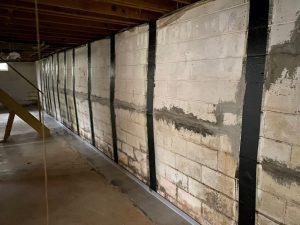 Carbon Fiber Straps:Carbon fiber reinforcements are applied to cracked or bowing walls to stabilize them and prevent further movement.
- Wall Anchors:Steel plates and anchors are installed to counteract lateral soil pressure on basement walls.
- Applications:Effective for addressing bowing or leaning walls in basements.
- Advantages:Non-invasive and durable.
- Crack Repair
- Epoxy Injections:Used to fill and seal structural cracks, restoring the integrity of the foundation.
- Polyurethane Injections:Effective for sealing cracks against water infiltration.
- Best For:Small to medium-sized cracks that do not indicate major structural issues.
- Drainage Solutions
- French Drains:Installed around the foundation to channel water away from the home.
- Sump Pumps:Removes water that accumulates around the foundation, preventing flooding.
- Advantages:Prevents hydrostatic pressure and reduces water-related foundation damage.
- Foundation Replacement
- Process:The damaged section of the foundation is removed and replaced.
- Applications:Used for severe damage that cannot be repaired with other methods.
- Considerations:This is a labor-intensive and costly option, often used as a last resort.
Innovative Foundation Repair Technologies
Modern advancements infoundation repairprovide efficient and durable solutions for homeowners:
- Micropiles
- Small-diameter steel rods are drilled deep into the ground to stabilize foundations in areas with difficult soil conditions.
- Advantages:Minimally invasive and highly effective.
- Soil Stabilization
- Involves injecting chemical solutions into the soil to improve its load-bearing capacity and prevent future shifting.
- Applications:Ideal for homes built on expansive or loose soil.
- Smart Monitoring Systems
- Sensors are installed to track foundation movement, soil pressure, and environmental conditions in real time.
- Benefits:Allows for early detection and proactive maintenance.
Preventive Measures to Protect Your Foundation
Preventing foundation issues is often more cost-effective than repairing them. Homeowners can take the following steps:
- Maintain Proper Drainage
- Ensure gutters and downspouts direct water at least 10 feet away from the foundation.
- Install French drains or grading to prevent water pooling near the home.
- Control Soil Moisture
- Use soaker hoses during dry periods to prevent soil shrinkage and cracking around the foundation.
- Landscaping Practices
- Plant trees and shrubs at a safe distance from the foundation to avoid root intrusion.
- Avoid heavy landscaping near the foundation that could increase soil pressure.
- Regular Inspections
Choosing the Right Repair Method
The appropriate foundation repair method depends on:
- Severity of Damage:Minor cracks may only require sealing, while significant settling may need underpinning or piering.
- Foundation Type:Different methods are used for slab foundations, crawlspaces, and basements.
- Soil Conditions:Homes built on expansive clay or loose soil often require specialized solutions.
- Budget:Repair costs can vary widely depending on the method and extent of the damage.
Consulting a professional foundation repair contractor is crucial for an accurate assessment and tailored solutions.
Benefits of Professional Foundation Repair Services
While some small repairs can be DIY, professional services provide:
- Expert Diagnosis:Professionals can identify the root cause of the issue and recommend the most effective solution.
- High-Quality Materials:Professional-grade tools and materials ensure durability and long-term results.
- Warranty and Peace of Mind:Many contractors offer warranties, protecting homeowners from future problems.
Foundation repairis a vital aspect of home maintenance, ensuring the safety, stability, and value of your property. From underpinning and slab jacking to crack repairs and drainage solutions, there are effective methods to address any foundation issue. By combining advanced technologies, preventive measures, and professional expertise, homeowners can protect their investment and ensure a strong, stable foundation for years to come.
Contact the Professionals at Basement Repair SpecialistsToday! (855) 554 7246