
Walk into almost any Wisconsin basement in July or August, and you will likely hear the constant hum of a portable plastic dehumidifier purchased from a local hardware store. Yet despite running around the clock—and noticeably driving up the monthly electric bill—many homeowners across Appleton, Green Bay, Madison, and Milwaukee still deal with musty odors, damp cardboard boxes, and “sweating” cold-water pipes.
If your store-bought unit struggles to keep up or quits working after two summers, it is not just bad luck. Standard retail dehumidifiers are engineered for warm, above-grade living rooms—not the unique thermal and moisture conditions of an underground Wisconsin basement.
Because concrete basement walls sit below the frost line, underground temperatures in Wisconsin remain naturally cool year-round, often hovering between 55°F and 62°F even during hot summer heatwaves. When warm, humid outdoor air enters your basement through rim joists, open windows, or foundation walls, it cools rapidly—causing relative humidity (RH) to spike.
Here is where standard retail units fail:
Controlling basement moisture is about more than comfort—it protects your entire home’s structure and indoor air quality. Due to the natural “stack effect,” up to 50% of the air you breathe on your first and second floors originates in your basement or crawl space.
To keep your home healthy, aim to maintain basement relative humidity between 45% and 50%:
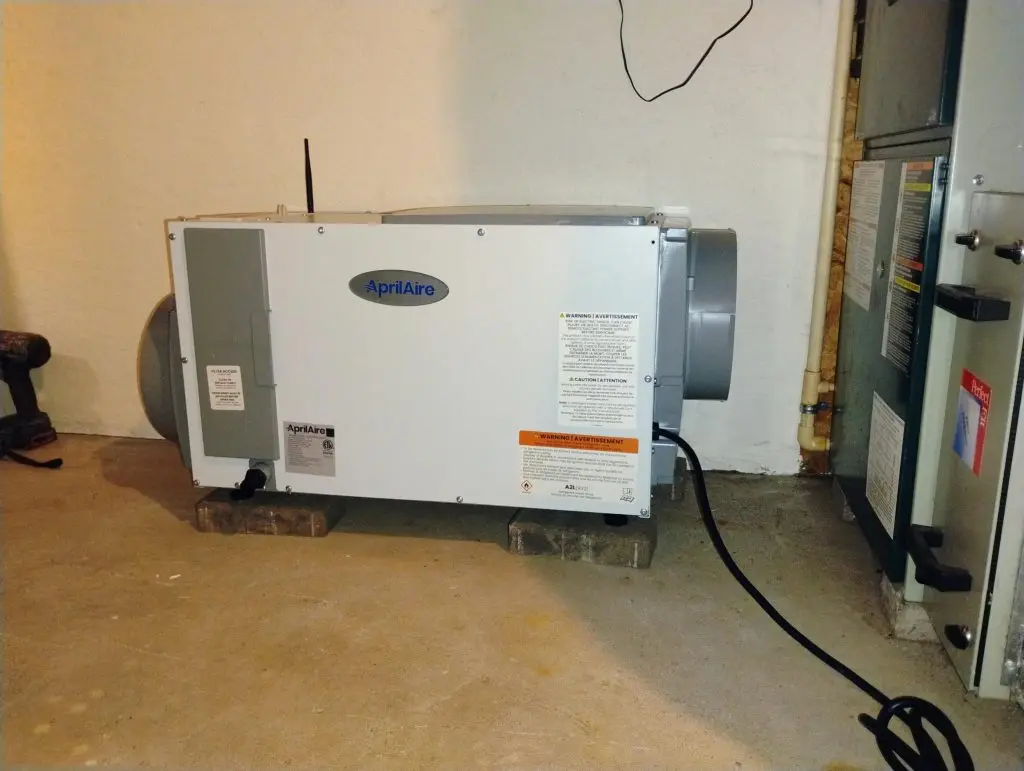
Professional basement dehumidifier systems are purpose-built for cool, high-moisture underground spaces and crawl spaces. Unlike portable retail appliances, dedicated basement units offer several key engineering advantages:
Commercial-grade units feature heavy-duty heat exchangers and intelligent defrost controls engineered to pull moisture efficiently from the air even when basement temperatures drop into the 40s or 50s.
Instead of struggling to remove 30 to 50 pints per day under ideal lab conditions, commercial basement dehumidifiers extract 70 to 100+ pints of water per day while drawing significantly fewer amps per pint removed—lowering monthly utility costs compared to running two retail units nonstop.
Rather than relying on a plastic bucket, professional installations connect a permanent drain line directly into your floor drain or sump pump system, providing true set-it-and-forget-it moisture control.
Many dedicated basement units include MERV-rated air filters that trap airborne mold spores and allergens while circulating dry air across multiple basement rooms—or through a sealed crawl space.
While a commercial dehumidifier is essential for controlling airborne humidity and summer condensation, it is not a substitute for waterproofing. If groundwater is actively seeping through wall cracks, bubbling up through floor joints, or pooling after heavy rain, a dehumidifier will simply try to evaporate standing water—working overtime without solving the root problem. Always address liquid water entry first with proper grading, crack repair, or an interior drain tile system.
Yes. Routing a gravity drain line or internal condensate pump tube straight into a sealed sump basin allows collected moisture to be pumped safely outside your home automatically—eliminating manual bucket emptying.
Built with corrosion-resistant coils and heavy-duty components, professional basement dehumidifiers typically last 10 to 15 years with minimal maintenance—usually just rinsing or replacing the air filter once or twice a year.
Cold groundwater entering your home’s copper or PEX supply pipes chills the pipe surface below the basement’s dew point. When humid summer air hits those cold pipes, moisture condenses and drips onto the floor. Lowering basement relative humidity below 50% stops pipe sweating immediately.
Stop wasting money on undersized hardware-store dehumidifiers that freeze up and burn out. At Basement Repair Specialists, LLC, we help homeowners across Appleton, Green Bay, Madison, and Milwaukee determine whether basement dampness stems from airborne humidity, groundwater seepage, or both—and recommend only what your home needs.
Ready to eliminate musty basement air for good? Call us 24/7 at (855) 554-7246 or schedule a free basement evaluation online today.

Tom Trinko is the dedicated owner of Basement Repair Specialists, a company renowned for its expert solutions in basement and foundation repairs. With a strong commitment to excellence and customer satisfaction, Tom has led his team to become one of the leading providers in the industry. Under his guidance, Basement Repair Specialists have developed a reputation for their reliability, innovative repair techniques, and exceptional service. Tom’s leadership is defined by his vast industry knowledge, customer-first approach, and a steadfast dedication to providing homeowners with cost-effective, durable solutions for their basement and foundation needs. For more information about Tom Trinko and the services offered by Basement Repair Specialists, visit their website at https://basementrepairspecialists.com/.
Contact the Professionals at Basement Repair Specialists, LLC Today! (855) 554-7246