
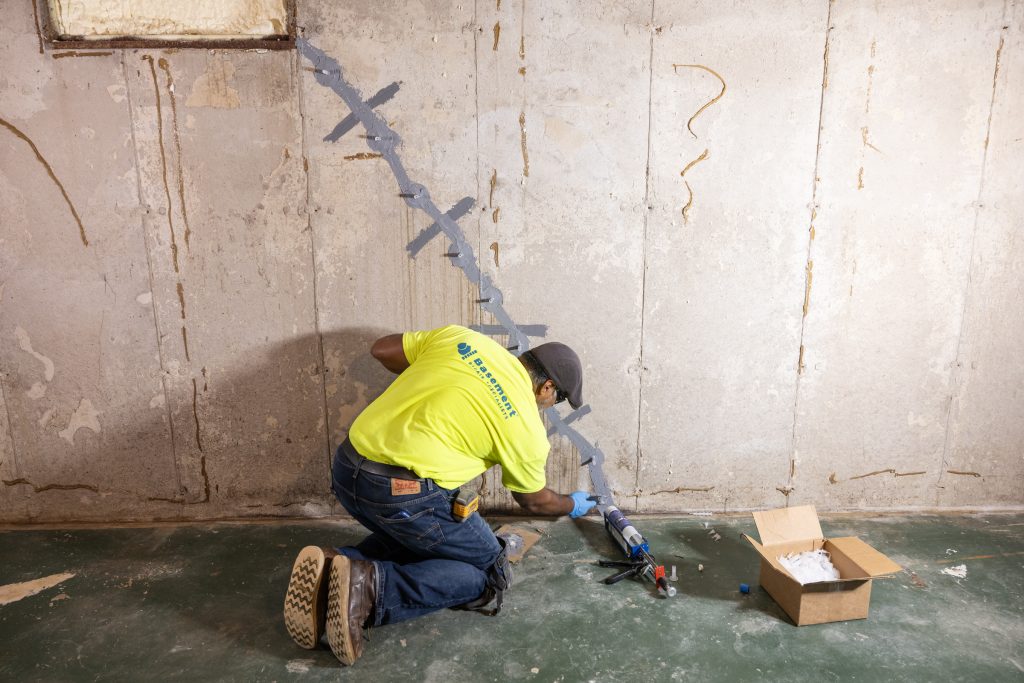
Your home is likely your largest investment, and that investment relies entirely on the strength of its foundation. In Wisconsin, our unique climate and geological makeup present specific challenges to structural integrity. From the heavy clay soils of the Fox Valley to the intense freeze-thaw cycles of a Madison winter, your foundation is under constant pressure.
Identifying issues early can mean the difference between a simple maintenance task and a massive structural overhaul. At Basement Repair Specialists LLC, we believe in empowering homeowners with the knowledge to spot trouble before it escalates. Here are five critical warning signs that your foundation may be shifting.

One of the most common early indicators of a shifting foundation is “frictional interference” in your home’s entryways. If you find yourself struggling to latch the front door or notice that a window that used to slide easily is now jammed, it isn’t just a sign of humidity or age. As the foundation settles unevenly—a process known as differential settlement—the rectangular frames of your doors and windows are pulled into a skewed, trapezoidal shape. This misalignment causes the doors to rub against the frame or fail to lock entirely.
While small hairline cracks in concrete can sometimes be a normal part of a home’s curing process, stair-step cracks in your exterior masonry are a major red flag. These cracks typically follow the mortar lines between bricks or blocks. When a section of your foundation sinks, it pulls the attached wall downward. Because the mortar is the weakest point of the wall, it separates in a diagonal, jagged pattern. If you can fit the edge of a credit card into these cracks, it is time for a professional evaluation.
In Wisconsin, our soil is often rich in clay, which is highly “expansive.” This means it swells significantly when wet and shrinks when dry. This cycle creates intense hydrostatic pressure against your basement walls. Unlike vertical cracks, which can be caused by simple settling, horizontal cracks usually indicate that the wall is actually bowing inward under the weight of the outside earth. If left unaddressed, this pressure can eventually lead to a total structural failure of the wall.
If you feel like you are walking uphill in your own living room, or if you notice a gap forming between the floor and the baseboards, your foundation is likely moving. In homes with crawlspaces or basements, the support beams are tied directly to the foundation footings. If those footings sink or shift due to poor soil compaction or moisture issues, the floors above will follow. This symptom often accompanies “bouncy” or squeaky floors, indicating that the internal support structure is no longer level.

Structural movement doesn’t stay in the basement; it travels upward. Take a look at the corners of your rooms and the points where the walls meet the ceiling. Large gaps or cracks in the drywall in these areas indicate that the “envelope” of your home is undergoing separation. You may also notice the crown molding pulling away from the ceiling or interior walls beginning to tilt. These are signs that the foundation is no longer providing a stable, level platform for the rest of the house.
The “Freeze-Thaw” cycle is our foundation’s greatest enemy. When water in the soil freezes, it expands, pushing against your foundation (frost heave). When it melts, it leaves behind voids and oversaturated soil that can no longer support the weight of the concrete. This constant back-and-forth movement is why Wisconsin foundations require engineered solutions like helical piers or professional reinforcement rather than temporary “patch” jobs.
While a total collapse is extremely rare and usually preceded by years of neglect, ignoring these signs leads to severe structural instability. Over time, the home can become unsafe for occupancy and the cost of repair will increase exponentially as more of the structure is damaged.
At Basement Repair Specialists LLC, we offer free professional evaluations. We believe homeowners should have access to expert advice without financial pressure, allowing you to make an informed decision based on the technical needs of your specific property.
If you simply fill a crack with caulk, it will likely return. However, when we use engineered solutions—like helical piers to support sinking footings or carbon fiber straps to strengthen bending walls—we tackle the main issue causing the movement, giving you a lasting fix.
Don’t wait for a crack to become a collapse. Contact Basement Repair Specialists LLC today for your free, no-obligation foundation evaluation.

Tom Trinko is the dedicated owner of Basement Repair Specialists, a company renowned for its expert solutions in basement and foundation repairs. With a strong commitment to excellence and customer satisfaction, Tom has led his team to become one of the leading providers in the industry. Under his guidance, Basement Repair Specialists have developed a reputation for their reliability, innovative repair techniques, and exceptional service. Tom’s leadership is defined by his vast industry knowledge, customer-first approach, and a steadfast dedication to providing homeowners with cost-effective, durable solutions for their basement and foundation needs. For more information about Tom Trinko and the services offered by Basement Repair Specialists, visit their website at https://basementrepairspecialists.com/.
Contact the Professionals at Basement Repair Specialists, LLC Today! (855) 554-7246