
Give us a call (24/7) at
Schedule Your Free Basement & Foundation Inspection(855) 554-7246
A Great Job at a Great Price!®
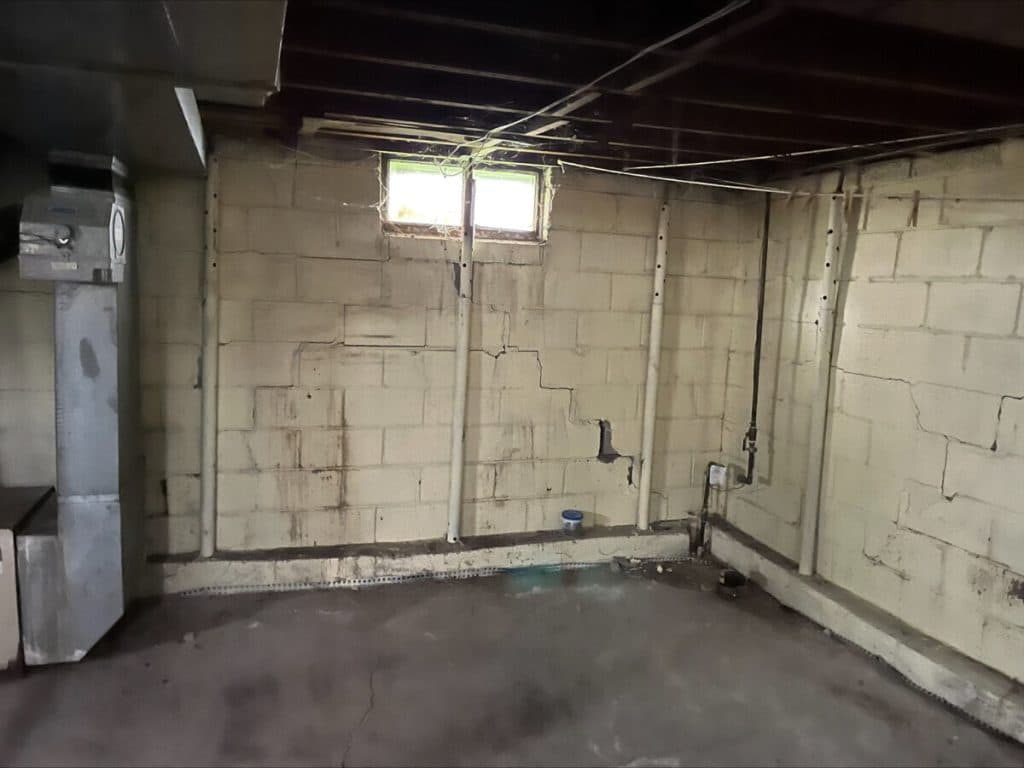
Basements are highly susceptible to water infiltration due to their position below ground level. As water seeps into the soil surrounding a home, it exerts pressure on the foundation, increasing the risk of leaks. Over time, this can lead to mold growth, structural damage, and indoor air quality issues. This article exploresmodern basement waterproofing methodsthat provide long-lasting protection, focusing on both preventive and corrective approaches to keep basements dry.
Exterior waterproofing methods are highly effective because they stop water from reaching the foundation in the first place. The goal is to prevent water from penetrating the walls by addressing the issue outside the home.
One of the most reliable solutions involves applying a waterproofing membrane to the exterior foundation walls. This membrane, typically made of asphalt-modified urethane, creates a barrier that blocks moisture from entering. The membrane is often paired with a drainage board to ensure any water that makes contact with the walls is directed downward into a drainage system.
Bentonite clay is another exterior waterproofing material used to create a protective layer around foundation walls. When the clay becomes saturated with water, it expands to form a dense barrier that effectively blocks water from seeping into the basement. Bentonite clay can be applied during new construction or as a retrofit for existing homes.
An exterior French drain system, or weeping tile, helps divert groundwater away from the foundation. This involves digging a trench around the home’s perimeter and installing a perforated drain pipe, which is surrounded by gravel to facilitate water flow. The pipe carries water away from the foundation, often to a dry well or municipal storm drain, ensuring that water does not accumulate near the foundation walls.
While exterior waterproofing focuses on preventing water from entering the home, interior waterproofing addresses water once it has infiltrated the basement. It is a viable option when exterior methods are not possible or as a secondary layer of protection.
Interior drainage systemsare a cornerstone of modern basement waterproofing. These systems typically consist of a drain tile or interior French drain installed along the perimeter of the basement floor. Water that enters the basement through walls or the floor is collected in the drainage system and directed to a sump pump, which removes the water from the home.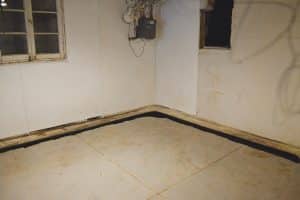
Sump pumps are crucial in interior waterproofing, especially in areas prone to heavy rainfall or rising water tables. When water accumulates in the sump pit, the sump pump activates to discharge the water outside the home. Installing a battery backup ensures the sump pump remains operational during power outages, which often occur during storms.
Moisture can enter a basement not just through leaks, but also as vapor. Installing vapor barriers on the walls and floors helps prevent water vapor from permeating the basement. Additionally, using a dehumidifier in conjunction with other waterproofing methods reduces the overall moisture levels in the basement, making the environment less conducive to mold growth and musty odors. Vapor barriers are especially useful in conjunction with other waterproofing methods to create a comprehensive moisture control system.
Cracks in basement walls and floors are common entry points for water. Sealing these cracks is an essential step in preventing water infiltration. Depending on the severity of the cracks, different sealing techniques can be employed.
For small to medium-sized cracks, epoxy and polyurethane injections are effective solutions. Epoxy injections are used for structural repairs, as they bond with the concrete to restore its integrity. Polyurethane injections, on the other hand, are flexible and better suited for cracks that experience movement due to soil expansion and contraction. These materials form a waterproof barrier, preventing water from entering through the cracks.
Hydraulic cement is a quick-setting material used to patch larger cracks and holes in basement walls. When applied, it expands as it hardens, creating a watertight seal. Hydraulic cement is particularly useful for sealing cracks around pipes or other structural penetrations in the basement walls.
Proper drainage is a crucial component of any basement waterproofing system. Managing both surface and groundwater ensures that water does not accumulate near the foundation, reducing the risk of leaks and water damage.
As mentioned earlier, exterior French drains are installed around the perimeter of a home to collect and redirect groundwater away from the foundation. These drains play a vital role in reducing hydrostatic pressure, which can cause water to seep through foundation walls. They work in conjunction with other exterior waterproofing methods to create a comprehensive system that keeps water away from the home.
Interior French drains, installed beneath the basement floor, collect water that enters through the walls or floor and channel it to a sump pump. This system is particularly effective for homes with high water tables or frequent basement flooding. The installation involves breaking up the concrete floor around the perimeter of the basement and placing the drain pipe in a bed of gravel to allow for proper water flow.
In addition to French drains, proper exterior grading ensures that surface water flows away from the home rather than pooling near the foundation. The ground should slope away from the house at a gradient of at least 6 inches over the first 10 feet. Additionally, maintaining clean and functional gutters and downspouts helps prevent water from overflowing near the foundation. Downspout extensions should direct water at least 5 to 10 feet away from the home to ensure it does not saturate the soil near the foundation.
Controlling humidity levels in the basement is just as important as waterproofing. High humidity can contribute to mold growth and musty odors, even in basements that are otherwise free of leaks. Here are some methods to control humidity:
A high-quality dehumidifier can significantly reduce humidity levels in the basement. Dehumidifiers work by pulling moisture out of the air and collecting it in a reservoir or draining it away. They are particularly useful in basements with poor ventilation or those that naturally retain moisture. Maintaining a humidity level below 60% is ideal for preventing mold growth.
Ensuring proper air circulation in the basement can help reduce moisture buildup. Installing exhaust fans or improving the ventilation system can encourage airflow and prevent moisture from becoming trapped in the space. Regularly opening windows, when weather permits, can also help reduce humidity.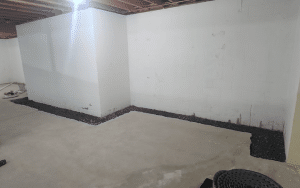
As part of a comprehensive waterproofing strategy,vapor barriersprevent moisture from seeping through the walls and floor. These barriers, made of heavy-duty plastic or other impermeable materials, block water vapor from entering the basement and reduce overall humidity levels. Vapor barriers are often used in conjunction with other waterproofing methods, particularly in areas with high humidity or in homes with unfinished basements.
For homeowners building a new home, incorporating waterproofing additives into the foundation construction can provide an extra layer of protection against water infiltration. These additives are mixed into the concrete used for the foundation and basement walls to enhance its resistance to moisture.
Crystalline waterproofing additives are mixed into the concrete and react with moisture to form insoluble crystals. These crystals fill the pores and small cracks in the concrete, creating a permanent waterproof barrier. Crystalline additives provide long-term protection against water infiltration and are commonly used in new construction projects.
Integral waterproofing admixtures are chemical compounds added to concrete during the mixing process to improve its overall water resistance. These admixtures reduce the permeability of the concrete, making it less susceptible to water penetration. Integral waterproofing admixtures are a proactive solution for preventing water damage in new basement construction.
No matter how comprehensive a basement waterproofing system is, regular inspections and maintenance are essential to ensure it remains effective over time. Homeowners should conduct periodic inspections to identify potential issues, such as new cracks, clogged drains, or malfunctioning sump pumps. Addressing small problems early can prevent them from becoming larger, more costly repairs down the line.
Keeping gutters and downspouts free of debris ensures that rainwater is properly diverted away from the home. Clogged gutters can cause water to overflow and pool near the foundation, increasing the risk of basement leaks. Homeowners should clean gutters at least twice a year, preferably in the spring and fall.
Regularly inspecting the basement walls and floors for cracks or signs of water seepage allows for prompt repairs before the situation worsens. Small cracks can often be sealed with epoxy injections or hydraulic cement, while larger cracks may require professional attention.
Sump pumps should be tested periodically to ensure they are functioning properly. Homeowners can test their sump pump by pouring a bucket of water into the sump pit and observing whether the pump activates and removes the water. It is also important to check that the discharge line is clear and free of obstructions.
Modern basement waterproofing methodsprovide homeowners with multiple options for keeping their basements dry and protected. From exterior waterproofing membranes to interior drainage systems, there are solutions available for every type of water infiltration. By combining these methods with proper drainage, humidity control, and regular maintenance, homeowners can safeguard their basements from moisture damage, mold growth, and structural issues. Whether dealing with minor leaks or significant flooding, taking proactive steps to waterproof the basement will enhance the longevity and livability of the home.
Contact the Professionals atBasement Repair SpecialistsToday!(855) 554-7246

Tom Trinko is the dedicated owner of Basement Repair Specialists, a company renowned for its expert solutions in basement and foundation repairs. With a strong commitment to excellence and customer satisfaction, Tom has led his team to become one of the leading providers in the industry. Under his guidance, Basement Repair Specialists have developed a reputation for their reliability, innovative repair techniques, and exceptional service. Tom’s leadership is defined by his vast industry knowledge, customer-first approach, and a steadfast dedication to providing homeowners with cost-effective, durable solutions for their basement and foundation needs. For more information about Tom Trinko and the services offered by Basement Repair Specialists, visit their website at https://basementrepairspecialists.com/.
Contact the Professionals at Basement Repair Specialists, LLC Today! (855) 554-7246