
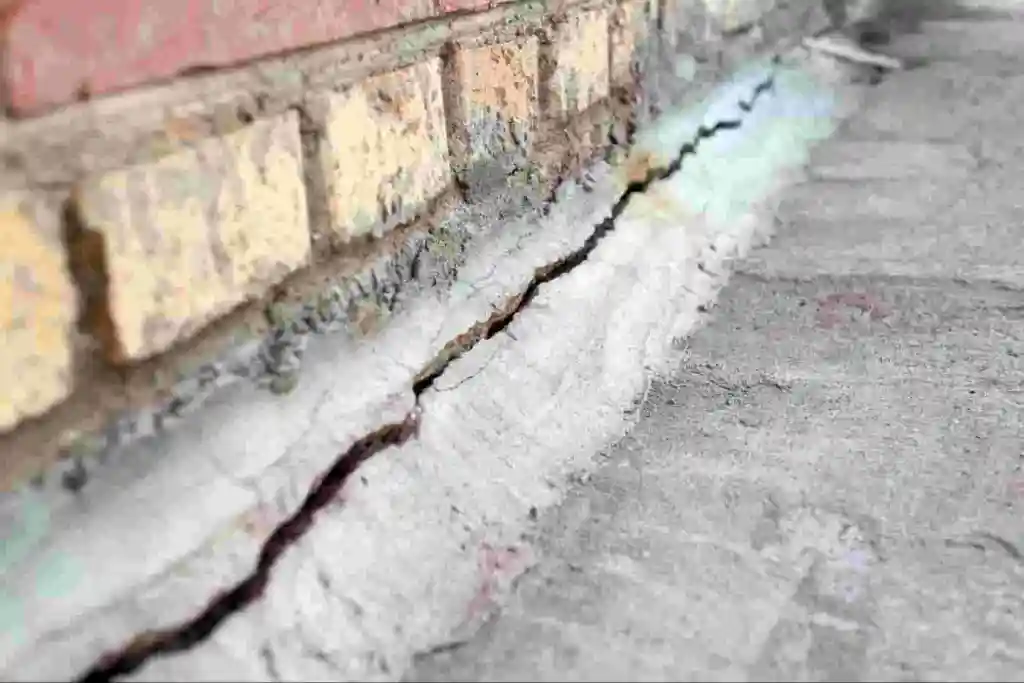

When a footing drops vertically, it unevenly stretches the entire wood framing of your home above grade. This physical movement leaves distinct warning signs throughout your upper living spaces, including diagonal cracks radiating from the corners of interior drywall openings, sloping floors, and windows that suddenly jam in their tracks. Down in the basement, differential settling manifests as distinct stair-step masonry fractures. These cracks strictly follow the zigzagging mortar joints between concrete blocks or exterior bricks, signaling that the deep soil layers beneath the concrete footings have softened, washed away, or shrunk, leaving the heavy structure without adequate structural support.
While settling is a downward vertical movement, the second major threat to your home acts horizontally. This is known as lateral soil pressure, and it is primarily driven by the specific geological characteristics of high-plasticity clay soils common across the Midwest. Clay acts exactly like a giant subsurface sponge; it expands violently when saturated with water and shrinks dramatically during hot, dry summer spells.
When heavy rains or rapid seasonal snowmelts saturate the ground around your home, the expanding clay exerts immense horizontal force—known as hydrostatic pressure—against your subterranean basement walls. This pressure acts like a slow-motion bulldozer pushing directly against the exterior face of your foundation. Over time, the structural resistance of the masonry block or poured concrete wall yields, forcing the wall to bow, curve, or lean inward. The classic diagnostic signature of active lateral displacement is a long, continuous horizontal crack running through the middle mortar joints of a block wall, often accompanied by visible shearing or inward sliding along the very bottom course of blocks right above the basement floor slab.
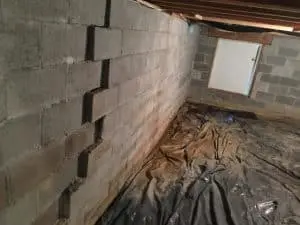
If your home is actively suffering from downward vertical settling, structural foundation repair requires bypassing the unstable, shifting topsoils entirely. This is achieved by installing heavy-duty steel push piers or helical piers. These engineered steel shafts are mechanically driven deep into the earth directly beneath your footings until they lock securely into stable, load-bearing geological strata or bedrock, allowing technicians to safely stabilize or permanently lift the home back toward its original level. Conversely, if your walls are bowing inward due to horizontal lateral pressure, the solution involves stabilizing the wall utilizing high-tensile carbon fiber straps or deep subterranean wall anchors that lock the basement wall to solid soil anchors placed out in your yard, neutralizing the hydrostatic pressure permanently.
Stair-step cracks are clear indicators of structural foundation settling. While a minor hairline fracture may not cause immediate structural failure, leaving it unaddressed allows the footing to sink further. Over time, this escalates into severe framing misalignment, broken utility lines, and major pathways for subsurface water intrusion.
No. Epoxy injection is an excellent method for sealing minor, non-structural cracks against water seepage, but it provides zero structural strength against lateral movement. A horizontal crack indicates that lateral soil pressure is actively breaking the structural integrity of your wall; it requires deep wall anchoring or steel beam stabilization to prevent eventual wall failure.
The total cost of foundation wall stabilization varies significantly based on the degree of inward wall deflection, the length of the wall, and whether the engineer specifies carbon fiber strapping, steel I-beams, or heavy-duty wall anchors. An accurate, code-compliant budget requires a precise, on-site structural evaluation from a qualified specialist.

Tom Trinko is the dedicated owner of Basement Repair Specialists, a company renowned for its expert solutions in basement and foundation repairs. With a strong commitment to excellence and customer satisfaction, Tom has led his team to become one of the leading providers in the industry. Under his guidance, Basement Repair Specialists have developed a reputation for their reliability, innovative repair techniques, and exceptional service. Tom’s leadership is defined by his vast industry knowledge, customer-first approach, and a steadfast dedication to providing homeowners with cost-effective, durable solutions for their basement and foundation needs. For more information about Tom Trinko and the services offered by Basement Repair Specialists, visit their website at https://basementrepairspecialists.com/.
Contact the Professionals at Basement Repair Specialists, LLC Today! (855) 554-7246